

Perfect Pizza Dough Recipe with Oven Tips
Enhance Your Dough Texture:
- Crunchy Crust: Add 20-30g of olive oil and 40g of maple syrup or honey for a crispier dough.
- Soft & Fluffy: Stick to the original recipe for a softer, more tender texture.
Sourdough Starter Tips:
- Swap the yeast with 100g of an active sourdough starter for a deeper flavour. Let it rise on the counter for 12-16 hours (or until doubled in size). Ball it up and refrigerate to cold ferment for another day in the fridge. This will bring out complex flavours and a beautifully textured dough. Cold ferment for up to 4 days or vacuum-seal and freeze after 1 day.
Recommended Flour:
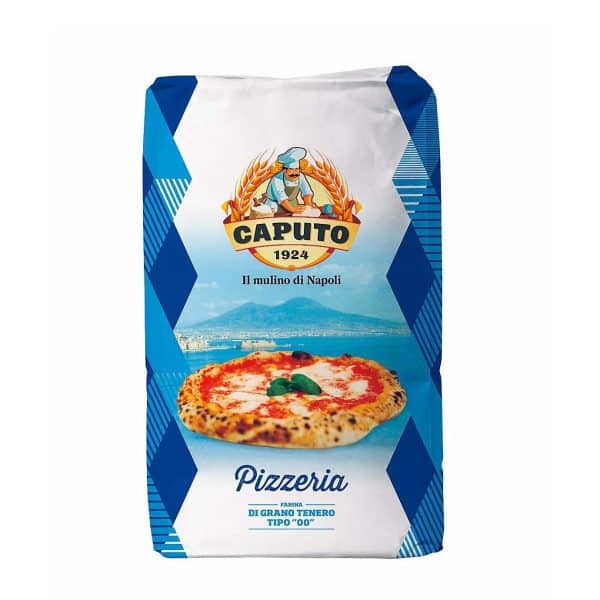
For the best results, we recommend using Caputo Type 00 flour, either the Blue or Red variety. These flours are specifically designed for pizza dough, offering the perfect balance of protein content and elasticity. The Blue label is ideal for traditional pizza dough, while the Red label has a slightly higher protein content, making it a good option for those looking for a bit more structure and chewiness in their dough.
If Caputo 00 flour is unavailable, any type of 00 flour works well, but you may need to adjust the hydration level slightly based on the flour you’re using.
Ingredients (Makes 4x 400g Dough Balls – 4x 12-inch `):
- 1000g flour (00-type preferred; if unavailable, use regular flour with a bit of vital gluten or just white flour)
- 650g water for 65% hydration. (If you would like a chewier crust, increase to 72% hydration/ 720g of water, though it’s a bit wetter to handle)
- 20g salt
- Yeast options:
- 4g regular dry yeast for short fermentation (1-2 days)
- 8g for same-day pizza making
- 1-2g for long fermentation (3-4 days) for a mild sourdough taste
Instructions:
- Mix & Combine:
Add all ingredients to a mixer or bread machine on the dough cycle until fully combined. - Cold Fermentation:
Cover the dough and refrigerate for 3-4 days to develop flavor. - Prepare to Bake:
Remove dough from the fridge and divide it into four equal balls. If using the same day, let rest at room temperature for 2-3 hours before cooking. Properly proofed dough should be stretchy and easy to work with; if it’s rubbery, it may still be too cold or under proofed. - Shaping & Stretching:
- For Puffy/Bubbly Edges (Airy Crust):
Gently re-ball the dough and let it rest for about 10-15 minutes to relax the gluten. When stretching, use your hands to press the dough from the center outward, working from the middle to the edges. This method preserves the air bubbles that have formed during fermentation. Be sure to push the air toward the edges without flattening it out. Avoid using a rolling pin for this, as it will deflate the dough and remove the air, leading to a denser crust. The result is an airy, light crust with puffy edges that have a crispy bite. - For a Flat Crust:
If you prefer a thinner, more uniform crust, use a rolling pin to flatten the dough. Start by gently pressing down on the dough with your fingers to create an initial flat base, then use the rolling pin to roll out the dough to your desired thickness. The rolling pin helps to evenly spread the dough and flatten it, which is perfect for a crisper, more uniform texture across the entire pizza. However, be cautious not to overwork the dough, as excessive handling can lead to a tough crust.
- For Puffy/Bubbly Edges (Airy Crust):
- Dusting & Prepping:
Use a generous amount of semolina durum flour for dusting and stretching. Semolina works best in a wood-fired oven due to its coarse texture, which prevents sticking and makes for a smoother slide onto the stone. Unlike regular flour or cornmeal, semolina can withstand the high temperatures of a wood-fired oven without burning, ensuring your dough stays in perfect shape and your pizza has a crisp, golden crust. - Freezing Option:
Dough can be halved or frozen after fermentation. For best results, vacuum-seal before freezing.
Oven Tips:
- Stone Temperature:
Invest in an infrared thermometer to accurately measure the stone temperature. For a perfectly crispy crust, aim for a stone temperature of 800°F to 850°F. Keep in mind that the oven’s built-in thermometer measures the ambient temperature, which is typically 150°F to 200°F lower than the stone temperature measured with an infrared thermometer. For example, if your stone temperature is 800°F, the oven’s thermometer might display a reading of around 600°F to 650°F. Measure stone temperature before you launch your pizza, ensure its at 800F. - Launching & Turning:
Place the pizza on the stone, wait about 30 seconds for it to start puffing up, then use a small paddle to turn it. Keep rotating until done.